Pie Crust (double)
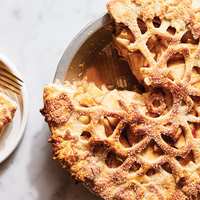
Ingredients
Instructions
Weigh your flour, or measure it by gently spooning it into a cup, then sweeping off any excess.
In a medium-sized mixing bowl, whisk together the flour and salt.
Add the shortening, working it in until the mixture is evenly crumbly, like coarse beach sand; you want everything thoroughly combined.
Cut the butter into small (about 1/2") cubes.
Add the butter to the flour mixture, and work it in roughly with your fingers, a pastry cutter, or a mixer. Don't be too thorough; the mixture should be quite uneven, with big chunks of butter in among the smaller ones. People get nervous about pie crust, and in their anxiety they tend to work the dough too much. Working the butter in completely makes a mealy crust rather than a flaky one.
Drizzle 4 tablespoons (57g) of water over the flour mixture, tossing gently to combine.
Add enough additional water to make a chunky, fairly cohesive mixture. It should hold together when you gather a bit up and squeeze it in your hand. Beware of kneading the pastry too much and/or adding too much water, as this will toughen the crust.
Gently shape the pastry into a cohesive mass. Or before shaping, take it a step further: Transfer the shaggy mixture to a piece of parchment paper. Press it into a rough rectangle and fold the dough into thirds, like a business letter. If necessary, spritz any dry areas with cold water and flatten and fold again, repeating the process until all errant bits of dough have been incorporated. Folding the dough in this fashion will create more flaky layers in your final crust.
Divide the dough in half. Gather each piece into a rough disk. Smooth the disks; it's OK if they have a few cracks in the surface. Smooth their edges by running the disks along a floured surface like a wheel.
Wrap the crusts in plastic or your favorite reusable storage wrap. Chill for 30 minutes, or up to overnight. Or wrap in aluminum foil over the plastic, and freeze for up to two months.
For complete details on finishing your pie (including rolling the pastry, transferring it to the pan, adding filling and top crust, and baking), please see our Pie Baking Guide.
Notes
Tips from our Bakers
Looking for a gluten-free version of the recipe? Find it here: Gluten-Free Classic Double Pie Crust.
Looking for a pie crust recipe that doesn't use shortening? Try our All-Butter Pie Crust.
If you're using an odd-sized pan, here's how to determine what diameter to roll your crust. Measure the pan's bottom diameter, then up the sides. If your pan is 7" across the bottom, and 1 1/2" up each side, that's a total of 10". This means you should roll your bottom crust to a diameter of about 12", which gives you enough extra for crimping the edges.
Be sure to use cold butter and ice water when making the crust; it helps keep the butter and shortening from dispersing throughout the dough, which in turn helps keep the crust flaky. Also, resting the dough in the refrigerator, both after mixing and rolling out, will dramatically increase the quality of your results by firming up the fats in the dough, helping it stay flakier.
Learn how to make pie crust like a pro with this quick video, Four Tips For Fail-Proof Pie.
Never mind the pastry blender; did you know your stand mixer does a great job with pie crust? See the details in our blog post, How to make pie crust in your stand mixer.